Emerald ash borer treatment for the ash worth saving
Treatment works. SDSU Extension reports properly applied treatments are more than 98 percent effective. It only works on a tree that is still healthy enough to move the product, and it has to be repeated. We'll tell you whether yours is one.
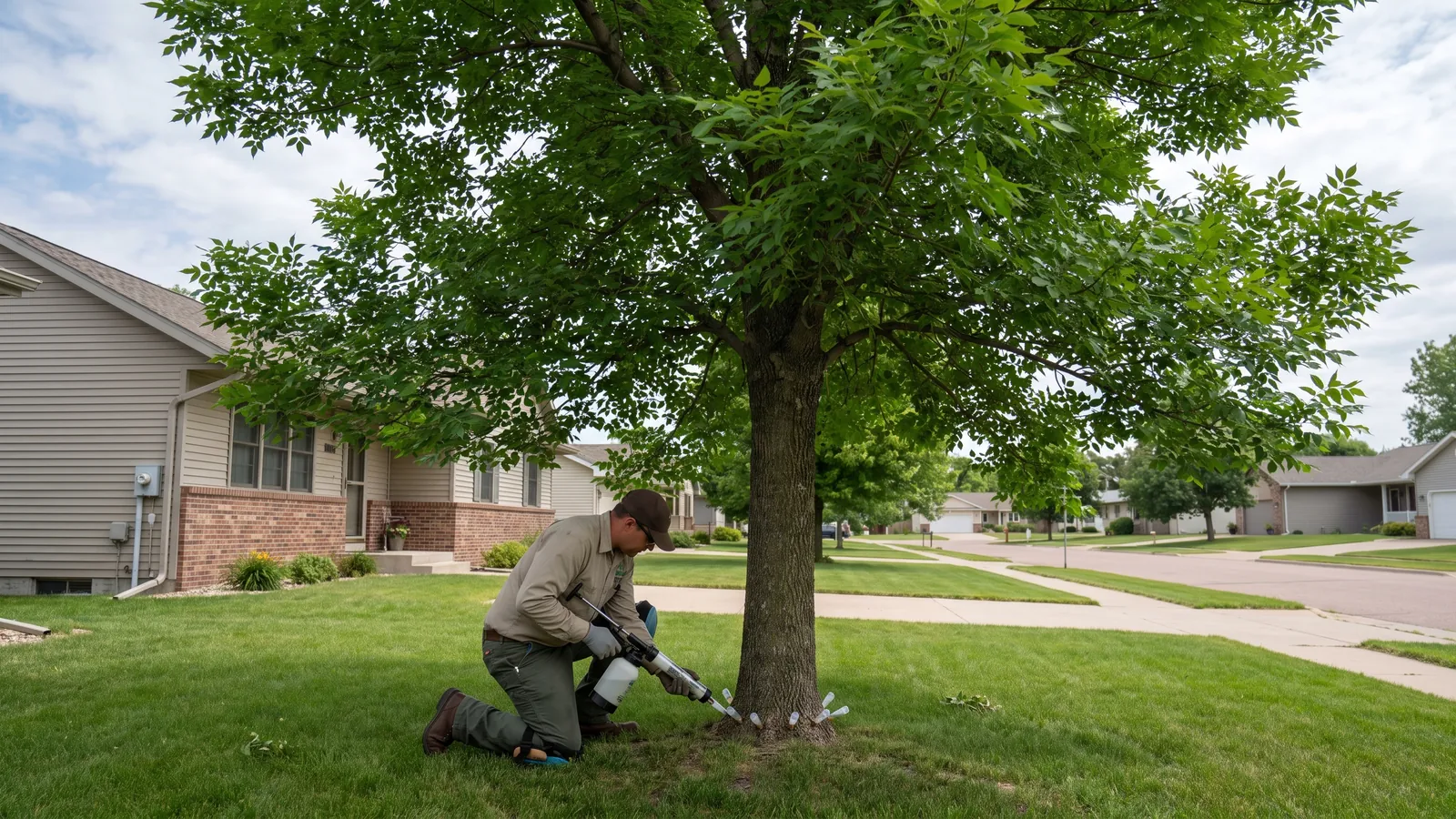
SDSU Extension's guidance is the standard we follow. Fewer than 1 percent of untreated ash survive an infestation. Properly applied treatments are reported more than 98 percent effective. The product that does the heavy lifting on mature trees is emamectin benzoate, injected into the trunk. SDSU lists brands including TREE-age, which gives two years of protection, and says emamectin benzoate can be used on trees with less than 35 percent canopy decline. Its August 2026 alert put it more simply: an untreated ash with about 40 percent decline is too late to treat, a tree with about 30 percent decline may survive treatment, and dead wood does not recover.
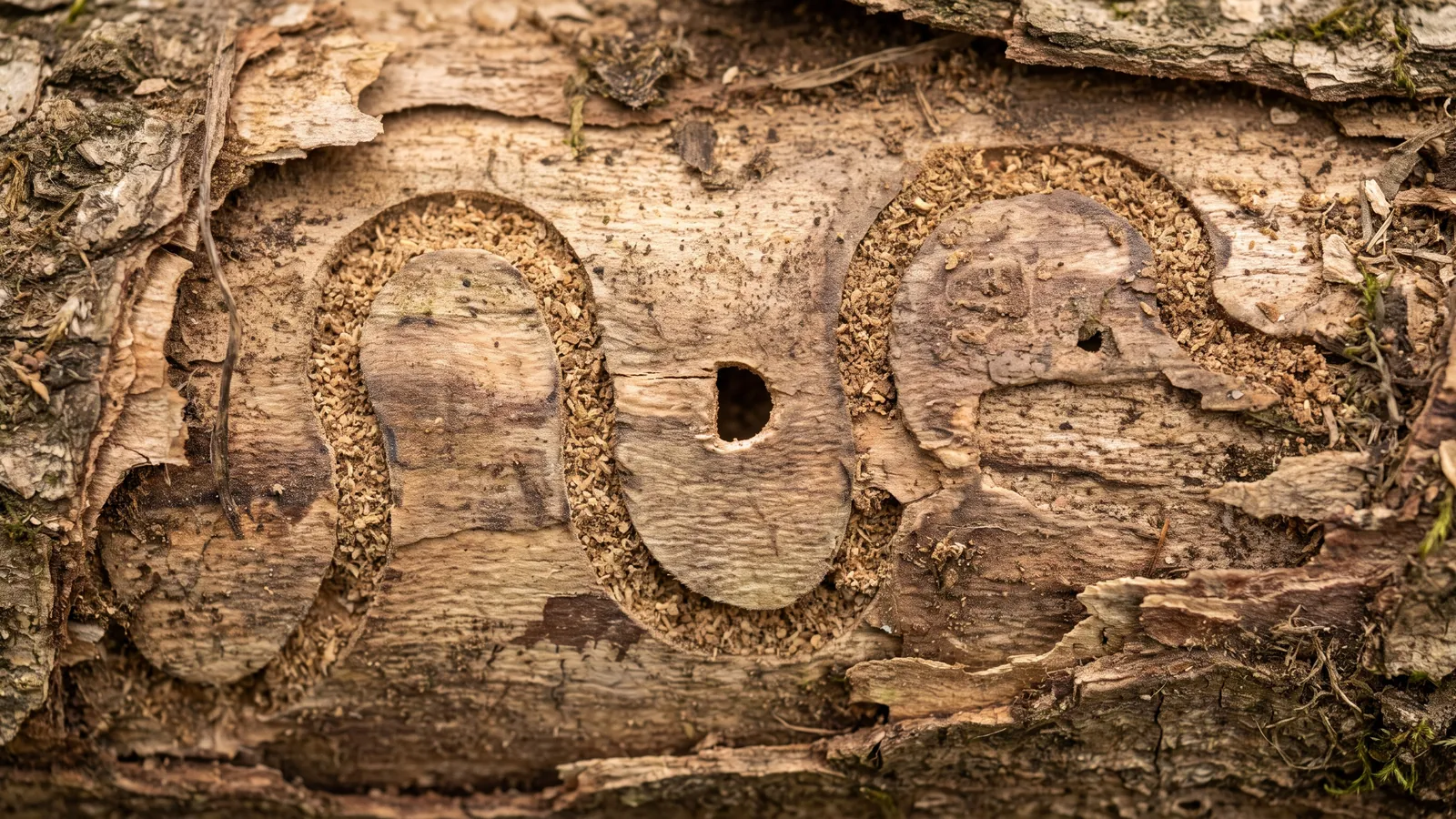
So the first job is an honest look at the tree. We check the crown for thinning and dieback, look for trunk sprouts, woodpecker damage and exit holes, and measure the trunk at 4.5 feet, the standard diameter at breast height. A healthy ash with a good structure in a spot you value is worth treating. One that is already half-bare, has a weak structure or stands over the house is better removed, and we'll say so. The City puts treatment at about $150 to $350 per tree for trunks 10 to 25 inches across, repeated every two years. Over ten years that's five treatments, roughly $750 to $1,750 per tree by our arithmetic, compared with a removal that only gets more expensive as the tree dies.
Timing matters. SDSU says the ideal trunk-injection window is from leaf-out to mid-June, when the tree is moving water fastest and carries the product into the canopy. Homeowner soil drenches work best on trunks under about 10 inches and lose effectiveness above 15, which is why SDSU recommends hiring a commercial applicator for larger ash. The City also recommends commercial applicators as the most effective option. If you treat an ash on the boulevard, report it to the 211 Helpline Center with the year treated and any blue removal number on the trunk, so the City's crews leave it standing.
What's included
Tree assessment first
Canopy loss, trunk diameter at 4.5 feet, structure and location checked before we recommend treatment.
Trunk injection
Emamectin benzoate injected at the base of the trunk, the method SDSU Extension lists for mature ash.
Applied in the right window
From leaf-out to mid-June, when uptake into the canopy is best.
Every two years, on a schedule
We keep the record and remind you when the next treatment is due.
Boulevard ash reported
If the tree is in the parking strip, we help you report the treatment so City crews leave it standing.
Honest no
If the tree is past saving, we tell you and price the removal instead.
EAB treatment cost in Sioux Falls, SD
| Job | Typical price | Notes |
|---|---|---|
| Trunk injection, ash 10–25 in across | $150 – $350 per treatment | The City's published range |
| Trunk injection, ash over 25 in | $350 – $650 per treatment | Priced by trunk diameter |
| Per inch of trunk diameter | $10 – $15 | How most injections are priced |
| Tree assessment | Free with an estimate | Written recommendation |
| Ten-year cost, every 2 years | $750 – $1,750 per tree | Five treatments at the City's range (calculated) |
| Deadwood pruning on a treated ash | $200 – $600 | Done Labor Day to Memorial Day |
These are 2026 Sioux Falls ranges to help you budget. Your written price is itemized (climb or bucket work, rigging, chipping and haul-off, stump grinding, crane time) and good for 30 days.
Recent work
Questions we get about eab treatment
Is treatment worth it?
For a healthy ash you want to keep, usually yes. SDSU Extension reports treatments more than 98 percent effective when done right, and fewer than 1 percent of untreated ash survive. For a tree that's already lost 40 percent or more of its canopy, no.
How often does it need to be done?
Every two years with emamectin benzoate. The City says that after the main outbreak passes, in about 10 to 12 years, intervals may stretch to four years or more, and treatment continues for the life of the tree.
Can I do it myself?
Homeowner soil drenches work on small trees, best under about 10 inches across. SDSU says most homeowner products don't work on larger trees and recommends a commercial service for ash over 10 inches.
When is the best time?
From leaf-out to mid-June for trunk injections. Treatment isn't done in the dead of winter or when the ground is frozen.
Will the injections hurt the tree?
Each injection leaves small wounds in the trunk, which is one reason treatment is spaced every two years. A tree that's healthy enough to treat closes them over.
My ash is on the boulevard. Can I treat it?
Yes. The City removes street ash for free unless the owner treats it. Report the treatment to the 211 Helpline Center with the year and any blue removal number, so it's taken off the list.